


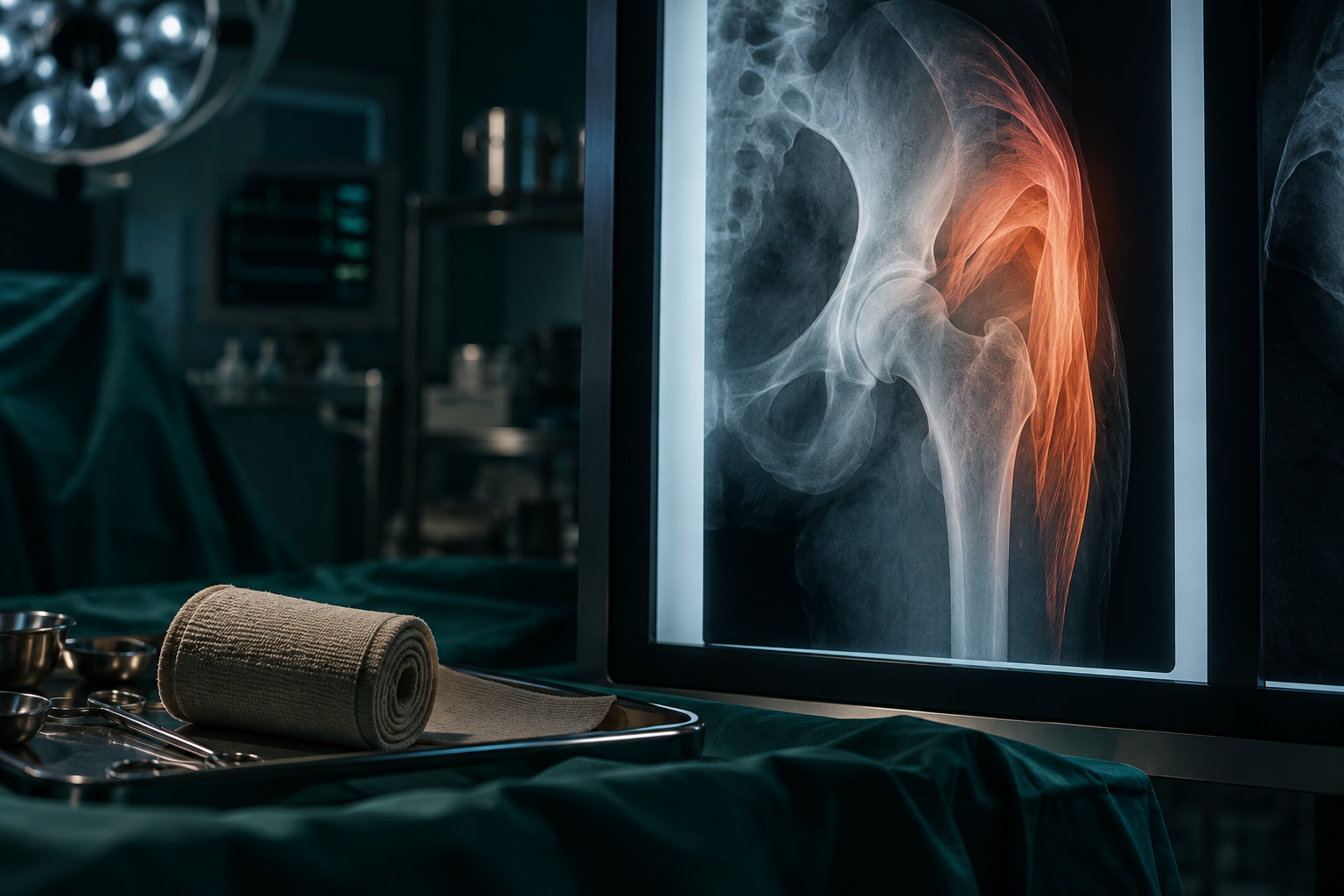
What Is a Soft Tissue Injury of the Hip?
Patients commonly seek help because the pain limits walking, sleeping on one side, climbing stairs, running or getting in and out of a car. Because several different structures can produce similar symptoms, a careful clinical assessment is often the most useful first step. Mr Shanmugasundaram Rajkumar is a Consultant Trauma and Orthopaedic Surgeon in Glasgow with a specialist interest in hip and knee conditions, and he assesses patients with hip pain to identify the likely source of symptoms and to guide appropriate, evidence-based management.
The term “soft tissue” refers to the structures around a joint that are not bone: muscles, tendons, ligaments, bursae (small fluid-filled cushions), and fibrocartilage such as the acetabular labrum, which is the rim of cartilage lining the hip socket. A soft tissue injury of the hip means that one or more of these structures has been strained, torn, compressed or become inflamed.
Injuries in this region may develop in two broad ways. Some are sudden, for example a hamstring or groin strain during sprinting, a fall onto the side of the hip, or a twisting injury on the football pitch. Others build up gradually through repeated loading, altered movement patterns or age-related changes in tendon quality. Gradual-onset problems such as gluteal tendinopathy and trochanteric bursitis (now often grouped together as greater trochanteric pain syndrome) can grumble on for months and may flare and settle repeatedly.
Structures commonly involved include:
- the gluteal tendons and the bursa over the bony point on the outside of the hip
- the adductor (groin) muscles and tendons
- the hamstring origin at the sitting bone
- the hip flexors, including iliopsoas and the associated bursa
- the acetabular labrum inside the joint
- the iliotibial band and the tensor fasciae latae on the outer thigh
Diagnosis matters because hip pain can also arise from early osteoarthritis, a stress injury of the bone, hernia-related groin pain, or referred pain from the lower back and pelvis. Treatment differs considerably depending on the true source, so guessing rarely helps.
Common Symptoms
Symptoms can vary depending on the underlying cause and on which tissue is affected. Common symptoms may include:
- pain in the groin, outer hip, buttock or upper thigh
- tenderness when pressing over a specific point, such as the bony prominence on the side of the hip
- pain when lying on the affected side at night, or when crossing the legs
- discomfort on standing up from a low chair, climbing stairs or walking uphill
- a sensation of catching, clicking or pinching deep in the groin, sometimes reported with labral irritation
- weakness, a feeling of giving way, or reduced confidence in the leg
- stiffness after rest that eases with gentle movement, then worsens with prolonged activity
Some patients experience swelling or bruising after a sudden injury, particularly with a muscle tear. Others notice no visible change at all, only pain with specific movements. Secondary effects are common: reduced walking distance, disturbed sleep, avoidance of exercise, and compensatory aches in the lower back, knee or opposite hip.
Possible Causes and Risk Factors
Possible causes of a soft tissue injury around the hip include:
- Sudden overload: sprinting, kicking, changing direction quickly, or lifting awkwardly.
- Direct trauma: a fall onto the side of the hip, a sporting collision, or a road traffic injury.
- Repetitive strain: a rapid increase in running mileage, hill work, cycling with poor bike set-up, or long periods of standing.
- Tendon changes with age: tendons become less tolerant of compression and load over time, which is why gluteal tendon problems are more common in middle age and beyond, particularly in women.
- Weakness or imbalance: reduced hip abductor or core strength can alter how load passes through the hip.
- Anatomical factors: subtle differences in hip shape, including cam or pincer morphology associated with femoroacetabular impingement, may make labral irritation more likely.
- Underlying joint disease: early osteoarthritis can coexist with, and contribute to, soft tissue pain.
- General health factors: raised body weight, diabetes, inflammatory conditions, smoking and low vitamin D may influence tendon healing.
Occupational and sporting risk factors are also relevant. Manual work, prolonged sitting with the legs crossed, dancing, football, martial arts and long-distance running all place particular demands on the hip’s soft tissues.
When to Seek Medical Advice
Many minor strains settle within a few weeks with sensible self-care. You should seek medical advice if symptoms are persistent, worsening, or following a significant injury. It is reasonable to arrange an assessment if:
- pain has not improved after two to three weeks of relative rest and gentle rehabilitation
- you cannot put weight on the leg, or walking has become markedly difficult
- the pain repeatedly disturbs your sleep or limits work and daily activities
- there is significant weakness, or the leg feels unstable
- symptoms return each time you resume activity
Please seek urgent medical attention if you have had a fall and cannot stand, if the leg looks shortened or rotated, if you develop fever with a hot, swollen hip, or if you experience numbness, spreading weakness or problems with bladder or bowel control. General guidance on hip pain is available from the NHS.
How a Soft Tissue Hip Injury Is Diagnosed
Clinical assessment
Assessment usually begins with a detailed history: how the pain started, where it is felt, what makes it better or worse, your activity levels, previous injuries and general health. Examination includes looking at your walking pattern, testing hip movement, assessing muscle strength, and using specific tests that load individual tendons or provoke the joint to help distinguish between possible sources of pain.
Investigations
Imaging is not always needed, and findings must always be interpreted alongside your symptoms. Where it is helpful, options may include:
- X-rays, mainly to assess joint space, bone shape and signs of arthritis
- ultrasound, which can show tendon and bursal changes and allows dynamic assessment
- MRI, which gives detailed information about muscles, tendons, the labrum and bone
- occasionally a diagnostic injection, which can help clarify whether pain is coming from inside or outside the joint
- blood tests if an inflammatory or infective cause is being considered
The aim is a clear explanation of what is causing your symptoms, so that management can be tailored to you rather than applied generically.
Treatment Options and Management
Treatment depends on the cause and severity of symptoms, the tissue involved, and your goals. Most soft tissue hip injuries are managed without surgery. Options may include:
Non-surgical care
- Activity modification: temporarily reducing aggravating loads such as hill running, deep stretching or lying on the painful side, while keeping generally active.
- Pain relief: simple analgesia or a short course of anti-inflammatory medication may be considered where suitable. Suitability varies between individuals, so your clinician or pharmacist will advise, in line with NICE guidance.
- Physiotherapy-led rehabilitation: progressive strengthening of the gluteal, adductor and core muscles, load management and movement retraining. This is the mainstay of treatment for most tendon-related hip pain, and evidence reviewed by organisations such as Cochrane supports exercise-based approaches for many musculoskeletal problems.
- Image-guided injections: corticosteroid or other injections may give short-term relief in selected cases, usually alongside rehabilitation rather than instead of it. Benefits and potential risks, including the possibility of temporary flare or tendon effects, should be discussed beforehand.
Surgical treatment
Surgery is not always needed and is considered only in a minority of cases, for example a substantial tendon tear, persistent symptomatic labral pathology, or symptoms that have not responded to a well-delivered course of conservative treatment. Where the underlying problem is advanced joint disease rather than soft tissue injury alone, joint-preserving options or hip replacement may be discussed. Any surgical recommendation should follow a full assessment and a shared decision-making conversation about the likely benefits, limitations and risks.
Living With and Managing the Condition
Recovery from a soft tissue hip injury is often gradual, and setbacks are common but usually temporary. Practical measures that may help include:
- keeping moving within comfortable limits rather than resting completely
- building strength consistently, two to three times a week, and progressing slowly
- avoiding prolonged positions that compress irritated tendons, such as sitting with legs crossed
- using a pillow between the knees at night if side-lying is painful
- increasing training volume gradually and allowing recovery days
- keeping a simple symptom diary to identify patterns and triggers
- addressing general health factors such as weight, sleep and activity levels
It is sensible to arrange review if symptoms plateau, worsen, or change in character, as the working diagnosis may need revisiting.
Why Choose Mr Shanmugasundaram Rajkumar?
Mr Shanmugasundaram Rajkumar is an experienced Consultant Trauma and Orthopaedic Surgeon specialising in hip and knee surgery, joint replacement and complex trauma care. With more than 16 years of consultant experience, he has particular expertise in total and partial knee replacement, hip replacement, revision joint surgery, knee arthroscopy and cartilage preservation. Fellowship-trained in lower limb arthroplasty and knee surgery, he combines modern surgical techniques with evidence-based care to help patients reduce pain, restore mobility and return to an active lifestyle.
- Honorary Senior Clinical Lecturer at the University of Glasgow
- College Tutor for the Royal College of Physicians and Surgeons of Glasgow
- Specialist expertise in both primary and revision hip and knee replacement
- Previous experience at Wrightington Hospital, a recognised centre for joint replacement surgery
- Uses 100% ODEP 10A-rated hip and knee implants, with outcomes recorded through the National Joint Registry
- Experienced in day-case joint replacement and cartilage preservation surgery
- Active researcher with experience in randomised controlled trials and UK and European multicentre studies
- Published in peer-reviewed orthopaedic journals, and a reviewer and consulting editor for international journals
- National lecturer and medical educator in Trauma & Orthopaedics
- Named among the Top 3 Orthopaedic Surgeons in Renfrewshire by ThreeBestRated
Importantly, a specialist assessment does not mean surgery is being recommended. In many cases the outcome of a consultation is a clear diagnosis and a structured non-surgical plan.
Location and Areas Served
Patients can access an orthopaedic consultation with Mr Shanmugasundaram Rajkumar in Glasgow, with support available for those travelling from Renfrewshire, Paisley and other surrounding parts of the west of Scotland.
Frequently Asked Questions
What causes a soft tissue injury in the hip?
Causes may include a sudden strain or tear during sport, a fall onto the hip, repetitive overload from running or standing, age-related tendon changes, muscle weakness, or subtle differences in hip shape. Often more than one factor is involved.
What are the main symptoms?
Symptoms may include groin, buttock or outer hip pain, local tenderness, pain lying on the affected side, discomfort on stairs, and sometimes clicking or a feeling of weakness. Symptoms vary with the tissue involved.
Can it get better on its own?
Many mild strains settle over a few weeks with sensible activity modification and gradual strengthening. Longer-standing tendon problems tend to need a structured rehabilitation programme to improve reliably.
How is it diagnosed?
Diagnosis is based mainly on your history and a physical examination. X-rays, ultrasound or MRI may be used where the picture is unclear or symptoms are persistent, and findings are always interpreted alongside your symptoms.
When should I see a specialist?
Consider a specialist assessment if pain persists beyond a few weeks, keeps returning, disturbs sleep, limits work or exercise, or followed a significant injury.
Is surgery always needed?
No. Most soft tissue hip injuries are managed non-surgically. Surgery is reserved for selected cases, such as significant tendon tears or persistent symptoms that have not responded to appropriate conservative treatment.
Can the problem come back?
Recurrence is possible, particularly if underlying strength deficits or training errors are not addressed. Ongoing strengthening, gradual increases in activity and attention to general health can reduce the risk of flare-ups.
Speak to a Specialist About Hip Pain
If you are experiencing symptoms that could suggest a soft tissue injury of the hip, a specialist assessment can help identify the likely cause and guide the most appropriate next steps. To discuss your symptoms and arrange an orthopaedic consultation with Mr Shanmugasundaram Rajkumar in Glasgow, please get in touch. If your symptoms are severe or rapidly worsening, contact your GP or NHS 111 without delay.
Treatments for this condition
Seeing Mr Rajkumar
New Consultation
£180
Follow-up
£110
Clinics
Ross Hall Hospital, Glasgow
Referral
GP, insurer or self-referral
Discuss your hip
An unhurried consultation with examination, imaging and a clear explanation.