


What Is Knee Osteoarthritis?
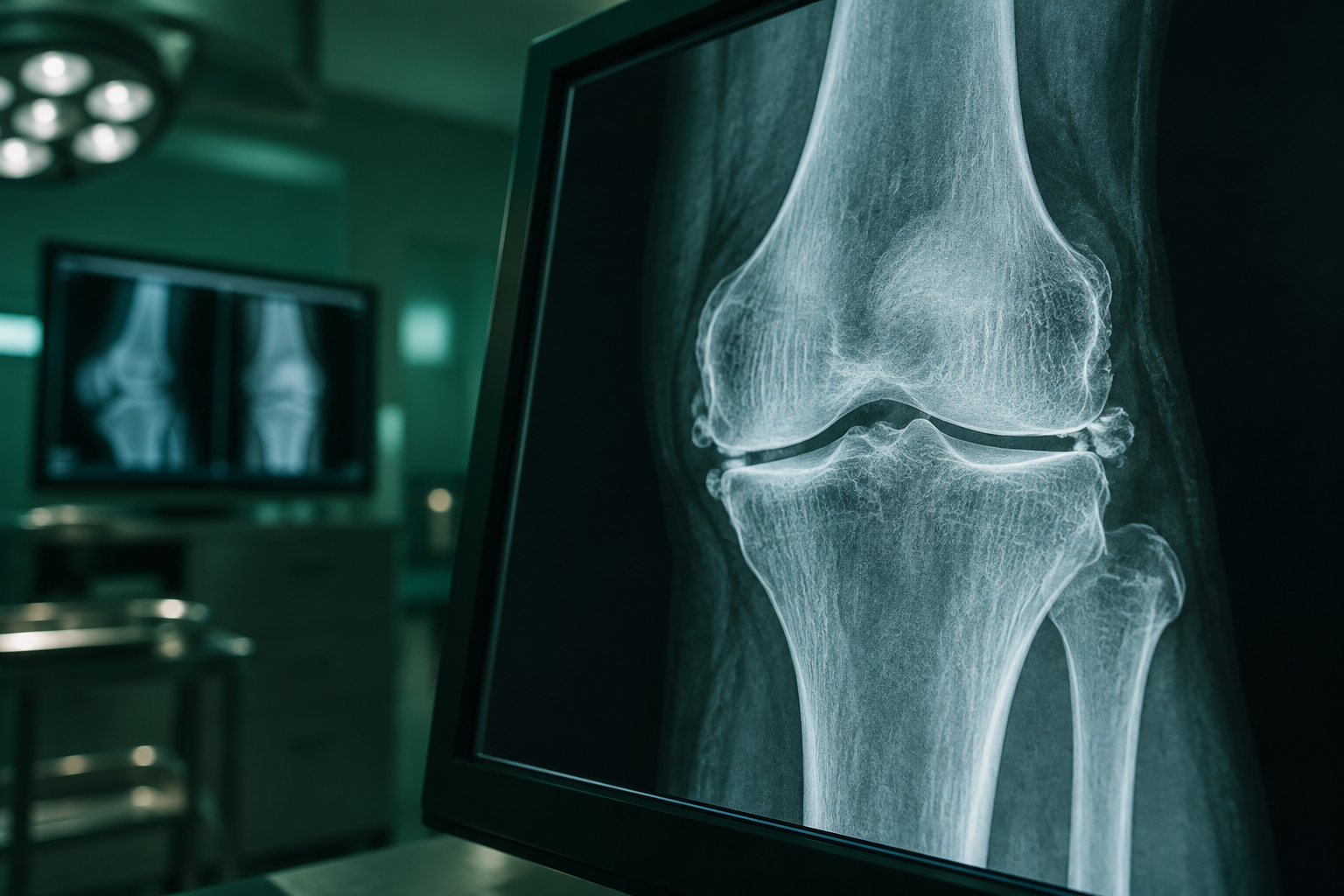
Osteoarthritis is a long-term condition affecting the whole joint, including the cartilage that lines the joint surfaces and the underlying bone. It also affects the joint lining and the surrounding muscles and ligaments. In a healthy knee, smooth cartilage allows the thigh bone (femur), shin bone (tibia) and kneecap (patella) to glide against each other. This happens with very little friction. In osteoarthritis, this cartilage gradually becomes thinner and rougher, and the bone underneath may thicken. Small bony growths, called osteophytes, can also form at the joint margins.
Osteoarthritis is not simply “wear and tear” caused by using the joint. It is better understood as an active process in which the joint attempts to repair itself. The repair response, however, does not always keep pace with the changes taking place. This is why symptoms often fluctuate, with better and worse periods rather than a steady decline.
The condition usually develops gradually over months or years. It also commonly affects one part of the knee more than another. A common example is the inner (medial) compartment or the joint behind the kneecap. Importantly, changes seen on an X-ray do not always match how someone feels. Some people with significant radiographic changes have relatively mild symptoms, while others with modest changes experience considerable pain. This is one reason why a proper clinical diagnosis matters. It allows treatment to be matched to your symptoms and goals, rather than to an image alone.
Common Knee Osteoarthritis Symptoms
Symptoms can vary from person to person and often change over time. Common symptoms may include:
- Pain in or around the knee, often worse during or after activity such as walking, standing for long periods, or climbing stairs
- Stiffness, particularly first thing in the morning or after sitting still, which usually eases within about half an hour of moving
- Swelling, which may come and go and can feel warm during a flare-up
- A creaking, grating or clicking sensation when bending the knee, sometimes described as crepitus
- Reduced range of movement, making it harder to kneel, squat or fully straighten the knee
- A feeling of weakness or instability, as though the knee might give way
- Gradual changes in leg shape, such as increasing bow-leggedness, in longer-standing cases
Some patients also experience night pain or disturbed sleep, and pain that no longer settles fully with rest. The functional impact is often what prompts people to seek help. Shopping trips become shorter, hobbies are given up, and driving or work becomes uncomfortable. Confidence on uneven ground also reduces. Symptoms frequently flare after unaccustomed activity and settle again over days or weeks.
Possible Causes and Risk Factors
Osteoarthritis usually results from a combination of factors rather than a single cause. Risk factors can include:
- Age: the condition becomes more common with increasing age, although it is not an inevitable part of ageing
- Excess body weight: higher body weight increases load through the knee and is also associated with inflammatory changes that may affect cartilage
- Previous injury: a cruciate ligament tear, meniscal (cartilage) tear or fracture involving the joint can increase the risk of post-traumatic osteoarthritis years later
- Previous knee surgery, particularly where a significant portion of meniscus has been removed
- Family history and genetics, which appear to influence individual susceptibility
- Joint alignment and anatomy, such as bow-legged or knock-kneed alignment, which concentrates load on one compartment
- Occupational and sporting factors, including heavy lifting, prolonged kneeling or squatting, and high-impact pivoting sports
- Other joint conditions, such as inflammatory arthritis or gout, which may cause secondary joint damage
- Muscle weakness, especially of the quadriceps, which reduces the joint’s shock absorption
Sex also plays a part, with knee osteoarthritis being somewhat more common in women. Regular moderate exercise, by contrast, is not a cause of osteoarthritis. It is one of the most useful things you can do for joint health.
When to Seek Medical Advice
You should seek medical advice if knee symptoms are persistent, gradually worsening, or interfering with work, sleep or daily activities. The same applies if pain follows an injury. It is also sensible to arrange a review if simple measures, such as activity modification, over-the-counter pain relief and exercise, have not helped. This applies after a few weeks of trying them.
More urgent assessment is advisable if the knee becomes hot, red and very swollen, with feeling generally unwell or feverish. It is also urgent if the knee locks or cannot bear any weight after an injury. The same applies if there is sudden severe swelling. These features may point to a different diagnosis, such as infection, inflammatory arthritis or an acute internal injury. They need prompt medical attention rather than watchful waiting.
How Knee Osteoarthritis Is Diagnosed
Diagnosis is largely clinical. A specialist knee assessment usually begins with a detailed history: how long symptoms have been present, and what makes them better or worse. It also covers how far you can walk and which activities you have had to give up. The history also includes what treatments you have already tried. Your general health, other joints, medication and previous injuries or operations are all relevant.
Physical examination typically includes looking at how you walk and stand, assessing alignment, and checking range of movement. It also involves feeling for swelling and tenderness, testing ligament stability and assessing muscle strength. A functional assessment helps to gauge the real-world impact on your life.
Weight-bearing X-rays are the most useful imaging test and can show joint space narrowing, osteophytes and alignment. Guidance from NICE supports diagnosing osteoarthritis clinically without routine imaging in typical cases. X-rays are used where they add value, for example to grade severity or plan surgery. An MRI scan is not needed for most people with osteoarthritis. It may be considered if a meniscal tear, ligament injury or another diagnosis is suspected. Blood tests are occasionally arranged to help exclude inflammatory or infective causes.
Treatment Options and Management
Treatment depends on the severity of your symptoms, the pattern of joint involvement, your general health and your personal goals. Options may include the following, usually in a stepwise approach.
Core non-surgical treatment
- Exercise and physiotherapy-led rehabilitation: strengthening the quadriceps, hamstrings and hip muscles, alongside aerobic activity, is recommended as a first-line treatment for everyone with osteoarthritis. It can meaningfully reduce pain and improve function
- Weight management: for those carrying extra weight, even modest loss can reduce knee loading and symptoms
- Activity modification and pacing: swapping high-impact activity for cycling, swimming or walking on level ground, and spreading demanding tasks across the week
- Footwear and walking aids: cushioned supportive shoes, and a stick used in the opposite hand where helpful
- Heat, cold and topical treatments: simple measures that many people find useful during flare-ups
Medication
Pain relief is used to support activity rather than replace it. Topical anti-inflammatory gels are often tried first for knee osteoarthritis. Oral anti-inflammatory medication or other analgesia is then considered, at the lowest effective dose for the shortest necessary time. Suitability depends on your other medical conditions and medicines, so this should always be discussed with your GP, pharmacist or consultant. Reliable information on medicines and self-care is available from the NHS and from Arthritis UK.
Injections and other procedures
A corticosteroid injection into the knee may be considered for a painful flare-up when other measures have not given enough relief. Benefit is usually temporary, and injections are best used as part of a wider plan alongside exercise. Evidence for some other injectable treatments is mixed, and your clinician will explain what is and is not supported by current evidence.
Surgical treatment
Surgery is considered when symptoms remain substantial despite non-surgical treatment and quality of life is significantly affected. Depending on the pattern of disease, options may include partial (unicompartmental) knee replacement or total knee replacement. In selected younger patients with localised damage and alignment problems, osteotomy or cartilage preservation surgery may also be considered. Arthroscopy is not recommended as a routine treatment for osteoarthritis. Joint replacement is a well-established operation with good long-term outcomes recorded in the National Joint Registry. All surgery, however, carries risks, including infection, blood clots, stiffness and the possibility of further surgery in future. These risks and benefits should be discussed in detail before any decision is made.
Living With Knee Osteoarthritis
Most people manage osteoarthritis successfully over many years. Helpful day-to-day strategies include keeping active with a routine you enjoy and can sustain, and building strength gradually rather than in bursts. It also helps to accept that some discomfort during exercise is normal. Sharp or lasting pain, however, is a signal to modify. Keeping a simple symptom diary can reveal patterns and help you and your clinician judge whether treatment is working.
Practical adjustments make a real difference: using a higher chair, installing a handrail, and breaking long journeys. Choosing supportive footwear and planning rest between demanding tasks also help. Sleep, mood and general fitness all influence how pain is experienced, so these are worth attention too. Arrange a review if symptoms change significantly, if function declines, or if you feel your current plan is no longer helping.
Why Choose Mr Shanmugasundaram Rajkumar?
Mr Shanmugasundaram Rajkumar is a Consultant Trauma and Orthopaedic Surgeon with more than 16 years of consultant experience. He specialises in hip and knee surgery, joint replacement and complex trauma care. He is fellowship-trained in lower limb arthroplasty and knee surgery, with particular expertise in total and partial knee replacement, hip replacement and revision joint surgery. His expertise also covers knee arthroscopy and cartilage preservation, including day-case joint replacement in suitable patients.
He is an Honorary Senior Clinical Lecturer at the University of Glasgow. He is also a College Tutor for the Royal College of Physicians and Surgeons of Glasgow. He previously worked at Wrightington Hospital, a recognised centre for joint replacement surgery. He uses ODEP 10A-rated hip and knee implants, and monitors outcomes through National Joint Registry and Scottish Arthroplasty Project data. He also remains active in research, including randomised controlled trials and UK and European multicentre studies. He has published in peer-reviewed orthopaedic journals, and serves as a reviewer and consulting editor for international journals. He is also a national lecturer and medical educator in Trauma & Orthopaedics. He was also named among the Top 3 Orthopaedic Surgeons in Renfrewshire by ThreeBestRated.
The emphasis throughout is on a thorough personalised assessment and a clear explanation of your findings. It also includes honest evidence-based advice, including when surgery is not the right answer.
Location and Areas Served
Patients can access specialist knee assessment with Mr Shanmugasundaram Rajkumar in Glasgow. Support is also available for those travelling from Renfrewshire and the surrounding areas of the west of Scotland.
Frequently Asked Questions
What causes knee osteoarthritis?
There is rarely a single cause. It is usually the result of several factors acting together, such as age, genetics or previous knee injury or surgery. Joint alignment, muscle weakness and excess body weight can also contribute.
What are the earliest knee osteoarthritis symptoms?
Early symptoms are often intermittent and easy to dismiss. Examples include an ache after longer walks, brief morning stiffness, mild swelling after activity, or discomfort on stairs. These may settle for weeks at a time before returning.
Can knee osteoarthritis get better on its own?
The underlying joint changes do not reverse, but symptoms genuinely can improve. Many people experience significantly less pain and better function with strengthening exercise, weight management and sensible activity adjustment.
When should I see a specialist?
Consider a specialist opinion if symptoms persist despite several months of non-surgical treatment, or if pain disturbs your sleep or limits walking. It is also worth an opinion if you would like a clear explanation of your imaging findings and treatment options.
Will I definitely need a knee replacement?
No. Many people with knee osteoarthritis never need surgery. Joint replacement is considered only when symptoms are severe and quality of life is affected. It is also considered when other treatments have not provided adequate relief.
Is exercise safe if my knee hurts?
For most people, yes, and it is one of the most effective treatments. Low-impact activity and progressive strengthening are usually well tolerated. If you are unsure, ask your GP, physiotherapist or consultant for guidance tailored to you.
Get your knee symptoms assessed
An unhurried consultation with examination, imaging and a clear explanation.
Treatments for this condition
Seeing Mr Rajkumar
New Consultation
£180
Follow-up
£110
Clinics
Ross Hall Hospital, Glasgow
Referral
GP, insurer or self-referral
Get your knee assessed
An unhurried consultation with examination, imaging and a clear explanation.