


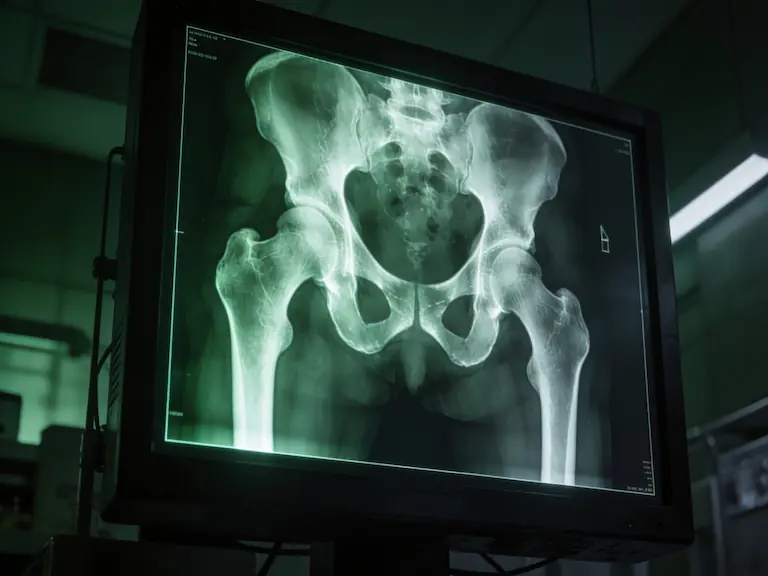
What Is Hip Arthritis?
The hip is a ball and socket joint, formed by the top of the thigh bone (the femoral head) sitting within a socket in the pelvis (the acetabulum). Both surfaces are lined with smooth articular cartilage, which allows the joint to glide almost without friction and helps cushion load during walking, running and stair climbing.
Arthritis of the hip describes wear, thinning or damage to that cartilage layer, along with changes in the underlying bone and the joint lining. As the cartilage becomes thinner, the bone surfaces move less smoothly against one another, which can lead to pain, inflammation, stiffness and a reduced range of movement. Small bony growths called osteophytes may also form around the joint.
Types of arthritis affecting the hip
- Osteoarthritis: the most common form, usually described as age-related or wear-related change, although it is influenced by genetics, joint shape and previous injury.
- Inflammatory arthritis: conditions such as rheumatoid arthritis, psoriatic arthritis or ankylosing spondylitis, where the immune system drives inflammation within the joint lining. Further information is available from Arthritis UK.
- Post-traumatic arthritis: changes that can follow a fracture, dislocation or significant cartilage injury.
- Arthritis secondary to hip conditions: including hip dysplasia, femoroacetabular impingement, avascular necrosis, or childhood hip disorders such as Perthes disease.
Hip arthritis is generally a long-term, progressive condition, but the rate of change varies considerably between individuals. Some people have mild symptoms that remain stable for years, while others notice a steadier decline in comfort and function. Because several conditions can mimic these symptoms, an accurate diagnosis matters before any treatment decisions are made.
Common Symptoms of Hip Arthritis
Symptoms can vary depending on the underlying cause and the stage of the condition. Common symptoms may include:
- Pain felt in the groin, the front of the thigh or deep in the buttock, sometimes radiating towards the knee
- Stiffness, particularly first thing in the morning or after sitting for a long period
- Pain that worsens with weight-bearing activity such as walking, standing or climbing stairs
- Reduced range of movement, especially when rotating the hip or bending it fully
- A limp, or the feeling that one leg is not moving as freely as the other
- Grinding, clicking or catching sensations within the joint
Some patients experience night pain or discomfort at rest as the condition advances, and sleep can become disturbed. Others find that symptoms fluctuate, with periods of relative comfort interrupted by flare-ups after unaccustomed activity. Practical difficulties are often the first thing people notice: struggling to cut toenails, get in and out of a low chair, put on shoes and socks, or walk as far as they used to. Knee pain alone can occasionally be the presenting feature of hip arthritis, which is one reason a thorough examination is important.
Hip Arthritis: Possible Causes and Risk Factors
There is rarely a single explanation. Possible causes and contributing risk factors include:
- Age: cartilage change becomes more common with increasing age, although arthritis is not an inevitable part of ageing.
- Family history and genetics: arthritis and joint shape both tend to run in families.
- Previous injury or surgery: hip fractures, dislocations or cartilage damage can accelerate later wear.
- Structural hip differences: hip dysplasia and impingement can place abnormal load on the cartilage over time.
- Body weight: higher body weight increases load across weight-bearing joints and may be associated with more symptoms.
- Occupational and sporting demands: heavy lifting, prolonged standing or high-impact sport may contribute in some people.
- Underlying medical conditions: inflammatory arthritis, gout, previous joint infection, sickle cell disease, or long-term steroid use associated with avascular necrosis.
Hip Arthritis: When to Seek Medical Advice
You should seek medical advice if hip pain is persistent beyond a few weeks, is gradually worsening, disturbs your sleep, or limits activities that matter to you. It is also sensible to be assessed if symptoms follow an injury, if simple measures such as activity modification and over-the-counter pain relief have not helped, or if you are relying on painkillers regularly.
More urgent assessment is appropriate if you are unable to weight-bear after a fall, if the hip becomes hot, swollen and painful with fever, if you experience unexplained weight loss alongside the pain, or if you develop new numbness, weakness or problems with bladder or bowel control. These features are uncommon, but they need prompt review.
How Hip Arthritis Is Diagnosed
Diagnosis is usually straightforward and is based on your history, examination and imaging considered together.
Clinical assessment
Your consultant will ask about the location and pattern of your pain, how long it has been present, what eases or aggravates it, how far you can walk, and how symptoms affect work, sleep and daily tasks. Your general health, medication, previous injuries and family history are also relevant. Examination includes assessing your gait, leg lengths, muscle strength and hip range of movement, and checking the spine and knee to rule out other sources of referred pain.
Imaging and tests
- X-rays: usually the first and most informative investigation, showing joint space narrowing, bone changes and osteophytes.
- MRI: may be used where the diagnosis is unclear, or to assess cartilage, labral tears or avascular necrosis.
- Blood tests: sometimes arranged if inflammatory arthritis, gout or infection is being considered.
- Diagnostic injection: occasionally helpful in confirming whether pain is arising from the hip joint itself.
Importantly, X-ray appearances do not always match symptoms. Treatment decisions are guided by how much the condition affects you, not by the images alone. Findings should be explained to you clearly, with time to ask questions.
Hip Arthritis: Treatment Options and Management
Treatment depends on the cause, the severity of symptoms and your individual circumstances. Most people begin with non-surgical measures, in line with the approach recommended by NICE.
Non-surgical management
- Exercise and physiotherapy: a structured programme to improve strength, flexibility and balance. Exercise therapy is consistently supported by evidence reviewed by Cochrane.
- Weight management: where appropriate, reducing load through the joint can help symptoms.
- Activity modification: pacing, swapping high-impact activity for cycling or swimming, and using a walking stick when needed.
- Pain relief: options may include paracetamol or anti-inflammatory medication, discussed in the context of your other health conditions. Any medication should be reviewed with your GP or consultant.
- Injections: a corticosteroid injection may provide temporary relief for some patients and can also aid diagnosis.
Surgical options
Surgery is generally considered when symptoms remain troublesome despite reasonable non-surgical treatment and quality of life is significantly affected. Total hip replacement is the most established option and is well documented in National Joint Registry data. In selected younger patients with structural hip problems and preserved cartilage, joint-preserving procedures may sometimes be discussed instead.
All surgery carries risks, including infection, blood clots, dislocation, leg length difference and the possibility of further surgery in the future. Benefits and risks should be weighed carefully so that any decision is fully informed and made with you rather than for you.
Living With Hip Arthritis
Many people manage symptoms well for years with sensible self-care. Helpful measures include keeping active within comfortable limits, maintaining hip and thigh muscle strength, using heat or ice for flare-ups, choosing supportive footwear, and adapting the home with a raised chair, a long-handled shoe horn or grab rails where useful. Keeping a simple symptom diary noting walking distance, night pain and painkiller use can be valuable at review appointments. If your symptoms change significantly, or self-management stops working, it is reasonable to arrange further review.
Hip Arthritis: Why Choose Mr Shanmugasundaram Rajkumar?
Mr Shanmugasundaram Rajkumar is an experienced Consultant Trauma and Orthopaedic Surgeon specialising in hip and knee surgery, joint replacement and complex trauma care, with more than 16 years of consultant experience. He is fellowship-trained in lower limb arthroplasty and knee surgery, with expertise in both primary and revision hip and knee replacement, and previous experience at Wrightington Hospital, a recognised centre for joint replacement surgery.
- Honorary Senior Clinical Lecturer at the University of Glasgow
- College Tutor for the Royal College of Physicians and Surgeons of Glasgow
- Uses 100% ODEP 10A-rated hip and knee implants
- Outcomes evidenced through National Joint Registry and Scottish Arthroplasty Project data
- Experience in day-case joint replacement and cartilage preservation surgery
- Active researcher, published author and reviewer for international orthopaedic journals
- National lecturer and medical educator in Trauma & Orthopaedics
Hip Arthritis: Location and Areas Served
Patients can access assessment and care with Mr Shanmugasundaram Rajkumar in Glasgow, with support available for those travelling from surrounding areas including Renfrewshire and the wider west of Scotland.
Hip Arthritis: Frequently Asked Questions
What causes hip arthritis?
It usually results from a combination of factors, including age, genetics, hip shape, previous injury, body weight and, in some cases, inflammatory conditions. There is often no single cause.
Can hip arthritis get better on its own?
Cartilage loss does not reverse, but symptoms can fluctuate and often improve considerably with exercise, weight management and appropriate pain relief.
How is the diagnosis confirmed?
Usually through a clinical history, physical examination and an X-ray, with MRI or blood tests added only if needed to clarify the picture.
Is surgery always needed?
No. Many people manage well without surgery. Joint replacement is generally considered only when symptoms remain significant despite non-surgical treatment.
When should I see a specialist?
What Is Hip Arthritis and Why Does It Cause Groin Pain?
Groin pain from hip arthritis is common, not unusual. The hip joint sits deep at the front of the pelvis. Its nerve supply refers pain into the groin and front of the thigh. Diagnosis usually starts with an examination and a weight bearing X-ray. Most people improve with exercise, weight management and simple pain relief. Hip replacement is considered only when symptoms remain significant.
Groin pain is one of the most commonly misunderstood symptoms in orthopaedics. Many people assume that hip problems cause pain over the outer hip or buttock. So when discomfort appears in the front of the groin, it is often blamed on a muscle strain. Other common explanations include a hernia or a sporting injury. In reality, groin pain from hip arthritis is a very typical presentation, particularly in adults over the age of 45. Understanding why this happens can help you seek the right assessment sooner and avoid months of uncertainty and discomfort.
Mr Shanmugasundaram Rajkumar is a Consultant Trauma and Orthopaedic Surgeon based in Glasgow. He has a specialist interest in hip and knee conditions. This page explains what hip arthritis is, why it often causes pain felt in the groin, and the symptoms and risk factors involved. It also covers how the condition is assessed, and the range of treatment options available. It is intended as general information rather than personal medical advice. A specialist assessment is always needed to confirm the cause of your symptoms.
Hip arthritis refers to wear, thinning or damage of the smooth cartilage that lines the ball and socket of the hip joint. The most common form is osteoarthritis, Other, less common types include inflammatory arthritis such as rheumatoid arthritis, post-traumatic arthritis after a fracture, and arthritis following childhood hip conditions. As the cartilage becomes thinner, the joint surfaces no longer glide as smoothly. The surrounding tissues may also become inflamed, and the bone can gradually change shape.
The reason pain is often felt in the groin comes down to the anatomy of the joint. The hip joint sits much deeper and further forward than most people expect, close to the crease at the front of the groin. The nerve supply to the hip joint capsule (largely from the obturator and femoral nerves) refers sensation to the groin and the front of the thigh. It sometimes reaches as far as the knee. This is why some patients present with knee pain and are surprised to learn that the hip is the source.
The condition is common. As of 2026, roughly 1 in 9 adults aged 45 and over in England is thought to have osteoarthritis of the hip, according to Arthritis UK. Around 100,000 primary hip replacements are also recorded each year in the UK by the National Joint Registry, and most are carried out for osteoarthritis.
Hip arthritis is usually a gradual, long-term condition that develops over years rather than weeks. Symptoms often fluctuate, with periods of relative comfort interrupted by flare-ups. Groin pain has many possible causes. These include hernias, tendon problems, hip impingement, labral tears, referred pain from the lower back and, less commonly, more serious conditions. An accurate diagnosis therefore matters before any treatment plan is agreed.
Groin Pain: Common Symptoms
Symptoms can vary depending on the underlying cause and the stage of the condition. Common symptoms of groin pain related to hip arthritis may include:
- A deep, aching pain in the front of the groin, sometimes described as a toothache in the joint
- Pain that spreads into the front of the thigh, or occasionally down to the knee
- Stiffness in the morning or after sitting for a long period, which eases as you move
- Difficulty putting on socks and shoes, cutting toenails or getting in and out of a car
- A catching, clicking or grinding sensation when the hip rotates
- Reduced range of movement, particularly when turning the leg inwards
- A limp, or a feeling that the leg is becoming shorter or weaker
Some patients notice that pain is worse after activity such as walking uphill, gardening or standing for long periods, and settles with rest. As arthritis progresses, night pain and rest pain can become more noticeable, and walking distance may reduce. Others experience relatively mild discomfort for years. There is no single pattern, and the severity of pain does not always match what is seen on an X-ray.
Groin Pain: Possible Causes and Risk Factors
Osteoarthritis of the hip usually results from a combination of factors rather than one single cause. Possible causes and risk factors can include:
- Age related change: cartilage wear becomes more common with increasing age, although arthritis is not an inevitable part of ageing
- Genetic and family factors: a family history of joint replacement or early arthritis may increase risk
- Hip shape and anatomy: conditions such as femoroacetabular impingement, hip dysplasia, Perthes disease or slipped upper femoral epiphysis can load the cartilage abnormally
- Previous injury: fractures around the hip, dislocations or labral injuries may lead to post-traumatic arthritis years later
- Inflammatory conditions: rheumatoid arthritis, ankylosing spondylitis and psoriatic arthritis can affect the hip joint lining
- Body weight: higher body weight increases load through the joint and is associated with symptom severity
- Occupation and sport: heavy manual work, repeated lifting and high impact sport may contribute in some people
- Other medical factors: avascular necrosis, long term steroid use, significant alcohol intake and certain childhood hip conditions
It is worth noting that moderate exercise does not cause hip arthritis. Regular activity is generally protective for joint health, as highlighted by Arthritis UK and by NHS guidance on managing joint pain.
Groin Pain: When to Seek Medical Advice
You should consider seeking medical advice if groin or hip pain is persistent or gradually worsening. It is also worth seeking advice if it affects your sleep, work or daily activities. It is also sensible to be reviewed if simple measures have not helped after a few weeks. These measures include rest, over-the-counter pain relief and activity modification. The same applies if symptoms started after an injury or a fall.
More urgent assessment is advisable if you have:
- Inability to weight bear after an injury, or a sudden change in leg length or shape
- Fever, redness, or a hot swollen joint, which may suggest infection
- Unexplained weight loss, night sweats or a history of cancer alongside new hip pain
- New numbness, pins and needles, or weakness in the leg
These features are uncommon, but they need prompt medical review rather than watchful waiting. If in doubt, contact your GP or NHS 111.
How Groin Pain From Hip Arthritis Is Diagnosed
Clinical assessment
Diagnosis begins with a detailed history. This covers where the pain is felt, how long it has been present, what makes it better or worse, how far you can walk, and which everyday tasks have become difficult. A physical examination follows, assessing your gait, leg lengths, muscle strength and the range of movement in the hip. Pain reproduced on internal rotation of the flexed hip is a well recognised sign of joint irritation. The lower back, knee and pelvic structures are also examined, because these can refer pain into the groin.
Imaging and further tests
Weight bearing X-rays of the pelvis and hip are usually the first investigation and can show joint space narrowing, bone spurs and cysts. An MRI scan may be considered if the X-ray looks relatively normal but symptoms persist, or if a labral tear, tendon problem or avascular necrosis is suspected. Blood tests may be requested where an inflammatory or infective cause is possible. In selected cases, a diagnostic injection of local anaesthetic into the hip joint can help clarify whether the joint really is the source of the groin pain.
Findings are then explained to you in plain language, alongside a discussion of what they mean for your treatment choices.
Groin Pain: Treatment Options and Management
Treatment depends on the cause and severity of symptoms, your general health, and how much your daily life is affected. Most patients begin with non-surgical care, in line with NICE guidance on osteoarthritis, which recommends exercise, education and weight management as core treatments.
Non-surgical options
- Structured exercise and physiotherapy: strengthening the gluteal and core muscles, improving flexibility and retraining walking patterns can meaningfully reduce pain
- Weight management: even modest weight loss can lower the load through the hip
- Activity modification: swapping high impact activity for cycling, swimming or cross training
- Pain relief: options such as paracetamol or topical or oral anti-inflammatories may be discussed with your GP or consultant, taking your other medical conditions into account
- Walking aids: a stick used in the opposite hand can reduce joint load and improve confidence
- Injections: a guided corticosteroid injection may provide temporary relief in some cases and can also assist diagnosis
Surgical options
Surgery is considered when symptoms remain significant despite reasonable non-surgical treatment and quality of life is affected. In younger patients with hip impingement or a labral tear and minimal arthritis, joint preserving procedures may be appropriate. Where arthritis is advanced, total hip replacement is a well established operation. It generally offers good outcomes for pain relief and mobility. As with any surgery there are risks. These include infection, blood clots, dislocation, leg length difference and the possibility of future revision. NHS guidance on hip replacement notes that many modern implants last 15 years or more. Implant performance in the UK is monitored through the National Joint Registry and independently rated by ODEP. Your clinician will discuss which options are suitable for you, including the option of continuing with non-surgical care.
Treatments for this condition
Seeing Mr Rajkumar
New Consultation
£180
Follow-up
£110
Clinics
Ross Hall Hospital, Glasgow
Referral
GP, insurer or self-referral
Discuss your hip
An unhurried consultation with examination, imaging and a clear explanation.