


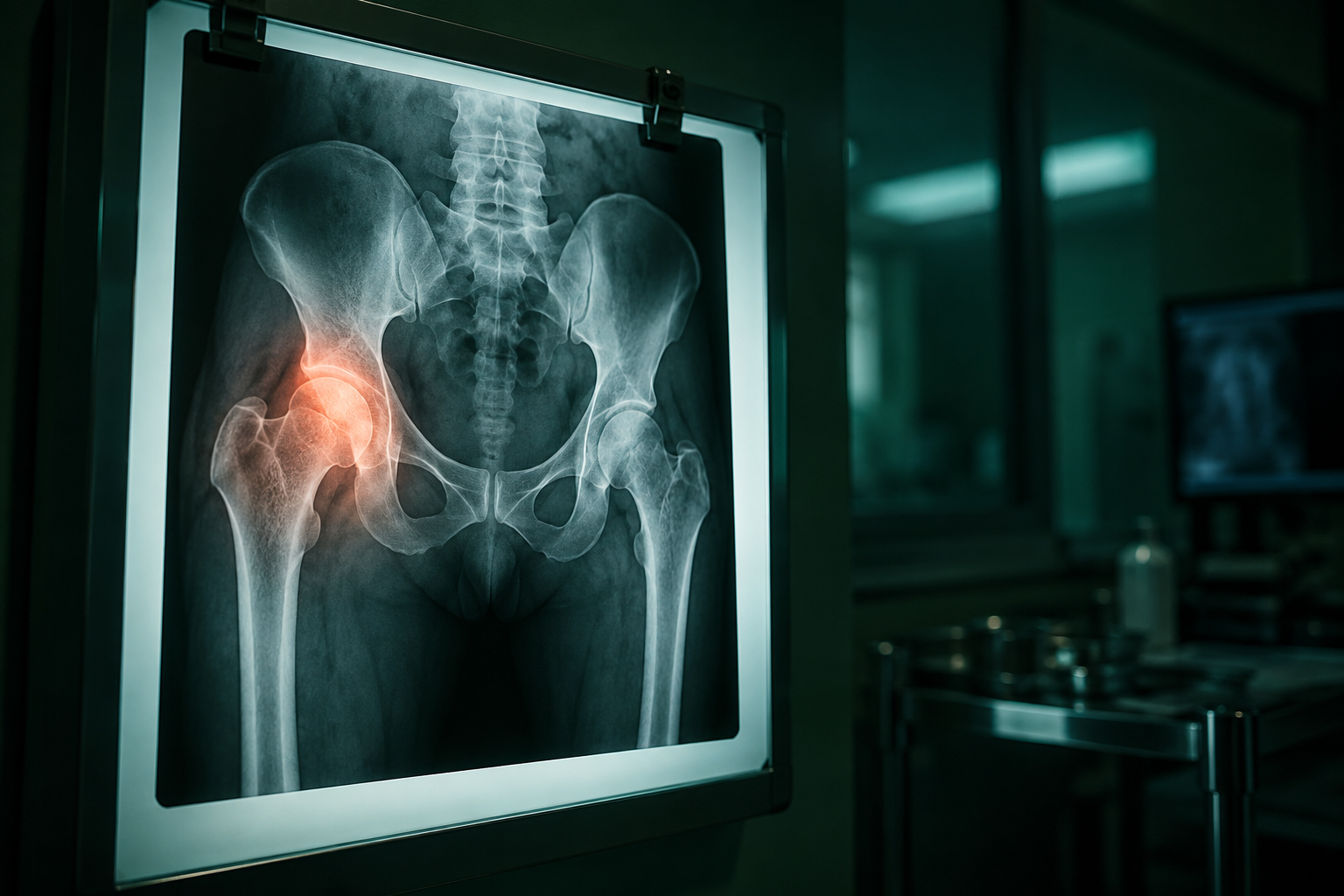
What Is Hip Pain?
The hip is a ball and socket joint where the rounded head of the femur (thigh bone) sits within the acetabulum, a cup-shaped socket in the pelvis. The joint surfaces are lined with smooth cartilage, cushioned by a rim of tissue called the labrum, and supported by a capsule, ligaments, tendons and powerful muscles including the gluteals and hip flexors.
“Hip pain” is a description of a symptom rather than a diagnosis in itself. Discomfort may arise from the joint itself, from the surrounding soft tissues, or from structures nearby such as the lower back, pelvis or abdomen. True hip joint problems often cause pain in the groin or deep in the buttock, and sometimes refer down to the front of the thigh or even the knee. Pain over the bony point on the outer side of the hip is more often related to tendons or bursae in that area.
Hip problems can be acute, for example after an injury, or gradual and progressive, as is typical with wear-related arthritis. Some patients experience intermittent flare-ups with symptom-free periods in between. Because the pattern varies so widely, establishing the underlying cause is the first step in choosing appropriate treatment.
Common Symptoms
Symptoms can vary considerably depending on the underlying cause, the stage of the problem and a person’s activity levels. Common symptoms may include:
- Pain in the groin, buttock or outer hip, sometimes radiating to the thigh or knee
- Stiffness, particularly first thing in the morning or after sitting for a long period
- Reduced range of movement, making it harder to bend, cross the legs, or put on socks and shoes
- Pain that worsens with walking, stairs, standing from a low chair or getting out of a car
- Clicking, catching, grinding or a sensation of the joint giving way
- Limping or an altered walking pattern, which can lead to secondary back or knee discomfort
- Night pain or difficulty lying on the affected side
Some patients notice their symptoms ease with gentle activity but worsen after prolonged exercise. Others find rest relieves the pain, only for stiffness to return when they get moving again. Keeping a simple record of what aggravates and eases your symptoms is often useful information for your clinician.
Possible Causes and Risk Factors
Possible causes of pain around the hip include:
- Osteoarthritis: gradual loss of joint cartilage, most common with increasing age, and a frequent cause of progressive groin pain and stiffness. NICE provides national guidance on the assessment and management of osteoarthritis.
- Greater trochanteric pain syndrome: irritation of the gluteal tendons or bursa on the outer hip, often causing tenderness when lying on that side.
- Femoroacetabular impingement and labral tears: where the shape of the ball and socket leads to abnormal contact, sometimes causing groin pain and catching in younger, active adults.
- Muscle and tendon injuries: hip flexor, hamstring or adductor strains, common in running and multidirectional sports.
- Fractures: including hip fractures after a fall in older adults with reduced bone density, and stress fractures in athletes.
- Inflammatory conditions: such as rheumatoid arthritis or other inflammatory arthritides.
- Referred pain: from the lumbar spine, sacroiliac joint, hernia or pelvic structures.
- Avascular necrosis: reduced blood supply to the femoral head, which can be associated with certain medical treatments and conditions.
Risk factors can include increasing age, previous hip injury or childhood hip conditions, a family history of arthritis, raised body weight placing extra load on the joint, physically demanding occupations, and high-impact or repetitive sport. Weight management, muscle strengthening and activity modification are often relevant regardless of the diagnosis.
When to Seek Medical Advice
You should seek medical advice if hip symptoms are persistent, progressively worsening, or follow an injury. It is also sensible to be reviewed if pain is disturbing your sleep, limiting your walking distance, affecting work or daily tasks, or has not improved after several weeks of simple self-care and over-the-counter pain relief.
Seek urgent medical attention if you are unable to bear weight after a fall, if the hip appears deformed, or if you develop a fever, unexplained weight loss, severe unremitting night pain, or new numbness, weakness or loss of bladder or bowel control. These features are uncommon but need prompt assessment.
How Hip Pain Is Diagnosed
A diagnosis is usually reached through a structured assessment rather than a single test.
History and symptom review
Your consultant will ask where the pain is felt, how it started, what makes it better or worse, how far you can walk, and how it affects sleep and daily activities. Previous injuries, general health, medication and family history are all relevant.
Physical examination
Examination typically includes assessment of your gait, leg lengths, hip range of movement, muscle strength and specific tests for impingement or tendon irritation. The spine and knee are often examined too, as pain can be referred from these areas.
Investigations
Weight-bearing X-rays are commonly the first imaging test for suspected arthritis or structural change. An MRI scan may be requested where soft tissue problems such as labral tears, tendon injury or early avascular necrosis are suspected, and ultrasound can be helpful for tendons and bursae. Blood tests may be arranged if an inflammatory or infective cause is being considered. Diagnostic injections are occasionally used to clarify whether pain is arising from within the joint.
Once the findings are clear, they should be explained to you in plain language, alongside the realistic options available.
Treatment Options and Management
Treatment depends on the cause, the severity of symptoms and how much daily life is affected. Most people begin with non-surgical measures. Options may include:
- Activity modification: reducing high-impact loading while maintaining movement through walking, cycling or swimming. Complete rest is rarely helpful.
- Physiotherapy-led rehabilitation: targeted strengthening of the gluteal and core muscles, flexibility work and gait retraining. Exercise therapy is a cornerstone of conservative care for hip osteoarthritis and tendon problems.
- Weight management: even modest weight loss can reduce load through the joint.
- Pain relief: simple analgesia or anti-inflammatory medication may be appropriate for some people, but suitability depends on your medical history and other medications, so this should be discussed with your GP, pharmacist or consultant.
- Walking aids and adaptations: a stick, raised seating or grab rails can improve confidence and independence.
- Steroid injections: corticosteroid or other injections may provide temporary relief in selected cases and can also help confirm the source of pain. Benefits vary between individuals and are not usually permanent.
- Surgery: considered when symptoms remain limiting despite appropriate non-surgical treatment. Depending on the diagnosis, this may involve hip arthroscopy for certain structural or labral problems, or total hip replacement for advanced arthritis. Fracture care may require urgent surgical fixation or replacement.
Surgery is not always necessary, and the decision should be shared. Your clinician will discuss the likely benefits, the recovery involved and the potential risks, which include infection, blood clots, leg length difference, dislocation and the possibility of further surgery in the future. Outcome data for joint replacement in the UK is monitored through the National Joint Registry.
Living With and Managing Hip Pain
Many people manage hip symptoms well over the long term with a consistent routine. Helpful measures include maintaining regular low-impact exercise, doing prescribed strengthening exercises most days rather than occasionally, using heat or ice for short-term relief, pacing demanding tasks across the week, and choosing supportive footwear. Sitting in higher chairs and avoiding very low seating can reduce stiffness on standing.
Tracking your symptoms, walking distance and painkiller use gives a clear picture of whether things are stable, improving or deteriorating. Arrange a review if pain increases significantly, if your function declines, or if you are relying on daily pain relief. Reliable patient information is also available from Arthritis UK.
Specialist Hip Assessment with Mr Shanmugasundaram Rajkumar
Mr Shanmugasundaram Rajkumar is a Consultant Trauma and Orthopaedic Surgeon with more than 16 years of consultant experience in hip and knee surgery, joint replacement and complex trauma care. He is fellowship-trained in lower limb arthroplasty and knee surgery, with expertise in both primary and revision hip and knee replacement, knee arthroscopy and cartilage preservation, and previous experience at Wrightington Hospital, a world class recognised centre for joint replacement surgery.
He is an Honorary Senior Clinical Lecturer at the University of Glasgow and a College Tutor for the Royal College of Physicians and Surgeons of Glasgow. He is also a national lecturer and medical educator in Trauma & Orthopaedics. He is an active researcher involved in randomised controlled trials and UK and European multicentre studies, is published in peer-reviewed orthopaedic journals, and acts as a reviewer and consulting editor for international surgical journals. In practice, he uses ODEP 10A-rated hip and knee implants, monitors outcomes through national registry data, and has experience in day-case joint replacement. He has also been named among the top three orthopaedic surgeons in Renfrewshire by ThreeBestRated.
Location and Areas Served
Patients can access specialist hip assessment with Mr Shanmugasundaram Rajkumar in Glasgow, with support available for those travelling from Renfrewshire, Paisley and surrounding parts of the west of Scotland and across Scotland.
Frequently Asked Questions
What causes hip pain?
Common causes include osteoarthritis, gluteal tendon or bursal irritation, muscle strains, labral tears and hip impingement, fractures after a fall, inflammatory arthritis, and pain referred from the lower back. The pattern and location of symptoms help narrow this down.
Can hip pain get better on its own?
Yes, some causes, particularly minor muscle strains and short-lived tendon irritation, often settle with relative rest, gradual return to activity and simple pain relief. Symptoms that persist beyond a few weeks or keep returning should be assessed.
Is hip pain always arthritis?
No. Arthritis is a frequent cause in older adults, but many people have soft tissue, tendon or structural problems, or pain referred from elsewhere. X-ray changes also do not always match the level of symptoms.
When should I see a specialist?
Consider a specialist review if pain limits walking, work or sleep, if it has not improved with physiotherapy and simple measures, if the joint gives way or locks, or if symptoms followed a significant injury.
How is the cause diagnosed?
Through a detailed history, physical examination and, where needed, imaging such as X-rays, ultrasound or MRI. Blood tests or a diagnostic injection are sometimes used to clarify the source of pain.
Is surgery always needed?
No. Most people are managed without an operation. Surgery is generally reserved for those whose symptoms remain significant despite appropriate non-surgical treatment, and it is always a shared decision.
Can hip problems come back after treatment?
Symptoms can recur, particularly with tendon-related problems or if strengthening exercises are stopped. Ongoing activity modification, weight management and maintenance exercise reduce the likelihood of flare-ups.
Treatments for this condition
Seeing Mr Rajkumar
New Consultation
£180
Follow-up
£110
Clinics
Ross Hall Hospital, Glasgow
Referral
GP, insurer or self-referral
Discuss your hip
An unhurried consultation with examination, imaging and a clear explanation.